
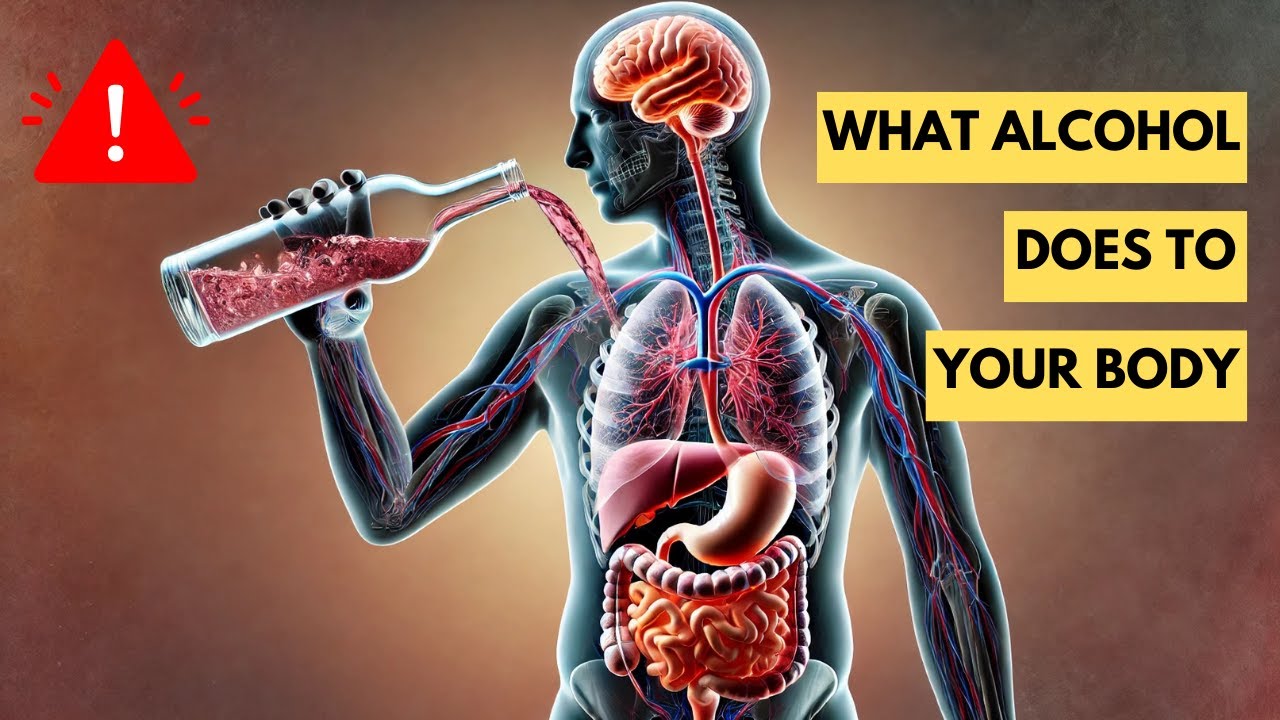
What Alcohol Really Does to the Body
Alcohol is one of the most widely consumed substances in the world. It's present at celebrations, social gatherings, and quiet evenings at home. For many people, a drink or two feels harmless — even enjoyable. But beneath the warm, relaxed feeling that alcohol produces lies a complex chemical process that touches virtually every system in the human body. Understanding what alcohol actually does — from the first sip to long-term heavy use — paints a very different picture than the one portrayed in advertisements and popular culture.
The Moment It Enters Your Body
The journey of alcohol through the body begins the instant you swallow it. Unlike food, alcohol does not need to be digested in the traditional sense. About 20% is absorbed directly through the stomach lining into the bloodstream, while the remaining 80% is absorbed through the small intestine. From there, it travels rapidly to the brain, heart, liver, and every other organ.
This absorption happens surprisingly fast. Blood alcohol concentration (BAC) can begin to rise within minutes of your first drink, and peak levels are typically reached within 30 to 90 minutes, depending on whether you've eaten, your body weight, your sex, and your individual metabolism.
What It Does to the Brain
The brain is perhaps the most immediately and profoundly affected organ. Alcohol is a central nervous system depressant, meaning it slows down brain activity by enhancing the effect of a neurotransmitter called GABA (which inhibits brain activity) and suppressing glutamate (which stimulates it). The result is the familiar feeling of relaxation and lowered inhibition that many people associate with drinking.
But as BAC rises, the effects become more pronounced and more dangerous. Reaction time slows. Judgment and decision-making become impaired. Speech slurs. Coordination deteriorates. At high levels, alcohol can cause blackouts — periods where the brain fails to form new memories despite the person appearing conscious and functional. At toxic levels, it can suppress the brain stem functions that control breathing and heart rate, which is why alcohol poisoning can be fatal.
Over time, chronic heavy drinking physically alters the brain. It shrinks brain volume, disrupts the balance of neurotransmitters, and damages the white matter that allows different brain regions to communicate. These changes contribute to memory problems, difficulty with reasoning, emotional instability, and in severe cases, a condition called Wernicke-Korsakoff syndrome — a form of brain damage caused by alcohol-related thiamine (vitamin B1) deficiency that results in severe memory loss and confusion.
The Liver Takes the Hardest Hit
The liver is the body's primary detoxification organ, and it bears the brunt of processing alcohol. It can metabolize roughly one standard drink per hour. When you drink faster than that, the excess alcohol circulates through your bloodstream until the liver can catch up — which is why the effects of heavy drinking build up over the course of an evening.
The process of breaking down alcohol generates toxic byproducts, most notably a compound called acetaldehyde, which is far more toxic than alcohol itself. Acetaldehyde damages liver cells, triggers inflammation, and contributes to scarring.
With repeated heavy drinking, this damage accumulates through three progressive stages. The first is fatty liver disease, where fat builds up in liver cells — a condition that is still reversible with abstinence. The second is alcoholic hepatitis, an inflammation of the liver that can range from mild to life-threatening. The third and most severe is cirrhosis, where healthy liver tissue is replaced by scar tissue, permanently impairing the liver's ability to function. Cirrhosis is irreversible and can lead to liver failure and death.
The Heart: A Complicated Relationship
The relationship between alcohol and the heart is nuanced and often misrepresented. You may have heard that moderate red wine consumption is good for the heart. While some studies have suggested a modest protective effect in certain populations, the overall scientific consensus has shifted in recent years — most experts now conclude that no level of alcohol consumption is entirely without risk.
In the short term, alcohol causes blood vessels to dilate, which creates that flushed, warm feeling and can temporarily lower blood pressure. But heavier drinking has the opposite long-term effect. Chronic alcohol use is a leading cause of high blood pressure (hypertension), which strains the heart and increases the risk of stroke.
Alcohol also directly weakens the heart muscle itself in a condition known as alcoholic cardiomyopathy, where the heart becomes enlarged and less efficient at pumping blood. This can lead to heart failure. Additionally, heavy drinking is strongly associated with arrhythmias — irregular heart rhythms — including a phenomenon known as "holiday heart syndrome," where otherwise healthy people develop atrial fibrillation after a bout of heavy drinking.
The Stomach and Digestive System
Alcohol irritates the lining of the stomach and digestive tract. Even moderate drinking can increase the production of stomach acid, leading to gastritis (inflammation of the stomach lining), acid reflux, and ulcers. For people who already have digestive issues, alcohol can significantly worsen their condition.
The pancreas is also vulnerable. Alcohol causes the pancreas to produce toxic substances that can trigger pancreatitis — a painful and potentially life-threatening inflammation. Chronic pancreatitis can impair the body's ability to produce insulin and digestive enzymes, affecting how the body regulates blood sugar and processes food.
The Immune System
Many people don't realize that alcohol significantly weakens the immune system, even after a single episode of heavy drinking. Alcohol interferes with the body's ability to produce white blood cells and disrupts the function of immune cells that fight off bacteria and viruses. This leaves the body more susceptible to infections, including pneumonia and tuberculosis.
Chronic heavy drinkers are far more likely to develop serious infections, recover more slowly from illness, and experience complications after surgery. The immune suppression caused by alcohol is not just a long-term consequence — it can begin within 24 hours of a heavy drinking episode.
Hormones and the Endocrine System
Alcohol disrupts the endocrine system in multiple ways. It interferes with the hypothalamic-pituitary-adrenal (HPA) axis, which regulates the body's stress response, increasing cortisol levels and placing the body in a state of chronic low-grade stress. Over time, this contributes to anxiety, sleep disturbances, and metabolic problems.
In men, chronic alcohol use lowers testosterone levels, which can lead to reduced libido, erectile dysfunction, and muscle loss. In women, it can disrupt the menstrual cycle and affect fertility. Alcohol also impairs the body's ability to regulate blood sugar by affecting insulin secretion, increasing the risk of type 2 diabetes.
The Link to Cancer
The connection between alcohol and cancer is one of the most underappreciated public health facts. Alcohol is classified as a Group 1 carcinogen by the International Agency for Research on Cancer — the highest risk category, shared with tobacco and asbestos.
Alcohol increases the risk of at least seven types of cancer, including cancers of the mouth, throat, esophagus, liver, colon, rectum, and breast. The risk increases with the amount consumed, but even light to moderate drinking has been linked to a higher risk of certain cancers, particularly breast cancer in women. The mechanism involves acetaldehyde damaging DNA, alcohol impairing the body's ability to absorb certain protective nutrients, and its role in increasing estrogen levels.
Sleep: The Illusion of Rest
Many people use alcohol to help them fall asleep, and while it does have a sedative effect initially, the quality of sleep it produces is significantly worse. Alcohol disrupts the REM (rapid eye movement) stage of sleep, which is the most restorative phase critical for memory consolidation, emotional regulation, and cognitive function.
As the body metabolizes alcohol during the night, it produces a rebound effect — the brain becomes more active, leading to fragmented sleep, vivid dreams, night sweats, and early waking. Over time, relying on alcohol as a sleep aid creates a vicious cycle: poor sleep increases stress and anxiety, which increases the urge to drink, which further worsens sleep.
The Morning After: What a Hangover Really Is
A hangover is the body's acute response to alcohol toxicity and the physiological chaos that drinking creates. The symptoms — headache, nausea, fatigue, sensitivity to light and sound, anxiety, and brain fog — are the result of several overlapping processes. Dehydration and electrolyte imbalance occur because alcohol is a diuretic, causing the kidneys to excrete more fluid than normal. Inflammation is triggered throughout the body as the immune system responds to alcohol's toxic byproducts. Blood sugar drops as the liver, busy processing alcohol, neglects its role in maintaining glucose levels. And sleep deprivation compounds everything.
The anxiety many people feel the morning after drinking — sometimes called "hangxiety" — is a real neurochemical phenomenon. After a night of enhanced GABA activity, the brain overcorrects by reducing GABA and increasing glutamate, leaving the nervous system in a hyperactive, anxious state.
The Long Road of Recovery
The body is remarkably resilient. Many of the harms caused by alcohol use — including fatty liver, high blood pressure, disrupted sleep, and even some cognitive impairment — can be partially or fully reversed with sustained abstinence. The brain begins to heal, the liver starts to repair itself, blood pressure normalizes, and sleep quality improves, often within weeks to months of stopping.
However, the more severe the damage — particularly cirrhosis, advanced cardiomyopathy, or significant neurological injury — the less reversible the consequences become. This is why early recognition and intervention matter so much.
Conclusion
Alcohol is not simply a social lubricant or a harmless way to unwind. It is a powerful psychoactive substance that interacts with nearly every organ and system in the human body, often in ways that are invisible until significant damage has already been done. That doesn't mean every person who drinks is in danger, but it does mean that understanding the real effects of alcohol — honest, clear, and free of cultural romanticization — is something everyone deserves to know.
Knowledge is the foundation of informed choice. And informed choice is always better than a choice made in the dark.